Much of the wildlife-crime story is told in seizures of dead product, ivory, scales, horn. But a distinct and growing threat deals in the living: birds, primates and reptiles taken from the wild and smuggled for the exotic pet market. Live-animal trafficking is uniquely cruel, and uniquely damaging to wild populations, because for every animal that reaches a buyer alive, many more die in transit.
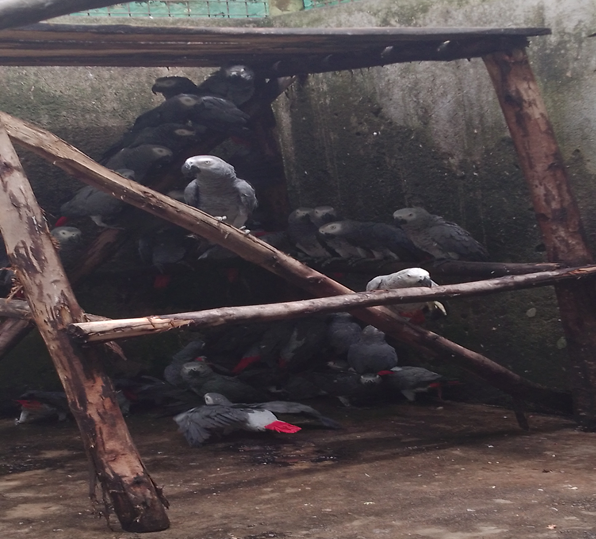
In April 2022, a Task Force operation intercepted a trafficker moving 122 live African grey parrots, a species so heavily traded that international commercial trade in wild-caught birds is banned under CITES. The birds, packed into crates for concealment, were rescued alive and taken into care for rehabilitation. The court convicted the trafficker and imposed a seven-year custodial sentence, among the heaviest penalties handed down for live-bird trafficking in Uganda.
In June 2024, enforcement teams in Kasese district rescued 31 colobus monkeys and seven Gabon vipers from traffickers operating along the Rwenzori borderlands, a known corridor for live cargo destined for regional and international markets. On conviction, the court fined each trafficker UGX 21 million, and the animals were handed to wildlife veterinarians for assessment and care.
Both cases turned on the same coordination model: community information, wildlife intelligence and rapid police response, working as one chain from tip to sentence. And both underline why live-animal trafficking matters beyond the individual animals. Stripping wild parrots, primates and reptiles from Uganda’s forests and savannahs quietly hollows out wild populations, distorts the ecosystems that depend on them, and, because so many animals perish in cramped, hidden transport, inflicts suffering far larger than the numbers that survive to be counted.
African grey parrots and many primates and reptiles are protected under CITES, and offences involving protected species carry severe penalties under Uganda’s Wildlife Act, 2019. But enforcement begins with information. If you learn of live animals being captured, caged, sold or moved, report it to the Task Force, anonymously if you prefer, and with a code to track what happens next.